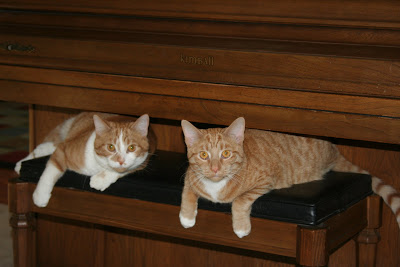
Several years ago my parents bought a place on Sanibel Island in Florida and started spending half the year there. I love going down to visit, but it can be really tough to get away from the clinic and this summer it didn't happen. Around Labor Day my cousin Chip and his wife Krystal moved to Big Pine Key near Key West...and I had the idea that maybe Thanksgiving on Sanibel would be doable. The clinic is only open a half day on Weds, would be closed on Thurs for Thanksgiving, and we usually come in and work a half day or until we run out of clients on Fri and are closed on Sat. I figured I could leave Tues night or Weds morning and come back Sun night and only have to close 2 extra half days. Luckily my parents, Chip and Krystal thought it was a good idea as well. Mom and Dad drove down, I flew down Wednesday morning, and Chip and Krystal drove up with their Lab Vader. The only one who DIDN'T think it was a good plan was Mom and Dad's cat Spooky. It's hard to say if he was more annoyed by Vader or by me, his least favorite person on the face of the earth.

Vader, on the other hand, thought it was a GREAT idea and wasted no time investigating the pool. It did take him just a little bit to figure out how to get IN, but once he had that down he was in heaven.


The next day we went back to the beach; it was about 80 degrees but the water was COLD! Krystal and Vader braved it for a little while and Dad and Chip took out the kayak. Mom and I were wimps and watched from our beach chairs!


 But my favorite place on the island is Ding Darling Wildlife refuge, which takes up a huge percentage of the island itself. Ding has about a five mile drive through the refuge; you can drive through at your own pace (usually barely rolling for me), stop and get out as you like, walk the trails and climb the viewing towers, or just watch from the car. I usually try to be there every morning as soon as the gates open and often make another run through in the afternoon or evening.
This time of year the white pelicans were very visible- they have not been there when I have gone down in the summer. The more common brown pelicans are around most of the time, but they tend to spend their time on the ocean rather than the bay side where the refuge is.


My very favorite "Florida birds" are the Roseate spoonbills. I didn't see many of them this year at Thanksgiving, so most of these shots were ones I took last summer when I went down. They were very much in evidence that time and I got many good views. They always remind me of the goons in the old Popeye cartoons.


This shot always makes me think of a choir director!


 Aaargh! Blogger STILL won't let me manipulate photos to my liking, so sorry about the annoying arrangements. Next time I make a trip down I think I am going to rent a big lens for my camera, as I was definitely suffering from "lens envy" comparing myself to the REAL photographers down there! My quest for a good in flight shot continues...they are really hard to get and I think I am going to have to figure out how to use a tripod and still get the right angle.
 Sorry for those of you with a slow connection- I know this one was really picture heavy but I always have fun shooting in FL!